A Complete Guide to E-Mark Certification for All Motorcycle Parts
When it comes to exporting and selling motorcycle parts across European markets, E-Mark certification is no longer an optional advantage-it is a mandatory legal passport and core quality credential. For global motorcycle part manufacturers, suppliers, and distributors, a full understanding of E-Mark compliance is essential for market access, product credibility, and long-term business growth. This article delivers a comprehensive overview of E-Mark certification covering all motorcycle components, helping global clients grasp its value, scope, and industry significance.
What Is E-Mark Certification?
E-Mark certification is a mandatory type approval system formulated by the United Nations Economic Commission for Europe (UNECE). It applies to all motor vehicles and their aftermarket parts, aiming to unify international standards for road safety, environmental protection, electromagnetic compatibility, and product durability.
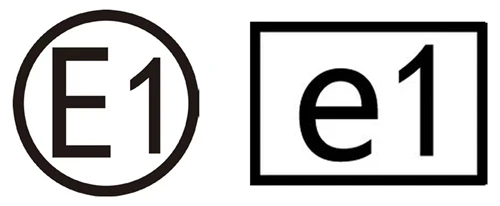
Distinguished by standard specifications, the circular E-Mark is exclusively for vehicle and component certification, recognized by all UNECE member countries. Each E-number corresponds to a specific European certification authority-for example, E1 for Germany, E2 for France, and E4 for the Netherlands. Once certified, products gain legal sales and road use qualifications in the entire European Economic Area, eliminating repeated testing and certification barriers across different European countries.
Full Coverage of Motorcycle Parts for E-Mark Certification
E-Mark compliance covers nearly all core and auxiliary components of motorcycles, covering safety, electrical, structural, and functional parts. Every component installed on road-legal motorcycles for European sales must pass corresponding ECE regulation tests:
1. Safety & Exterior Parts
This category includes headlights, taillights, turn signals, brake lights, reflectors, license plate brackets, and windshields. These parts strictly follow ECE lighting and visibility regulations, ensuring standard light beam distribution, luminosity, and weather resistance to avoid dazzling oncoming riders or causing visibility failures in harsh conditions. Brake systems, brake pads, and tires are also mandatory E-Mark items, with standardized friction performance, wear resistance, and grip to guarantee riding safety.
2. Structural & Body Components
Motorcycle frames, swingarms, fenders, seat assemblies, handlebars, foot pegs, and body fairings all require E-Mark certification. The certification verifies structural stability, vibration resistance, impact tolerance, and material durability, ensuring parts maintain stable performance under long-term riding vibration, bumpy road conditions, and extreme temperatures.
3. Electrical & Electronic Parts
All motorcycle electronic components fall under E-Mark supervision, including batteries, wiring harnesses, switches, instrument panels, ignition systems, and electromagnetic accessories. Compliance with ECE R10 electromagnetic compatibility standards ensures no electronic interference with other vehicle systems, preventing circuit failure, signal disorder, or potential safety hazards during riding.
4. Emission & Power System Parts
Engine components, exhaust systems, mufflers, and air filters must pass E-Mark environmental and performance tests. The certification strictly controls exhaust emissions, noise levels, and power stability, complying with European environmental protection laws and low-noise traffic regulations to meet regional green travel standards.
Core Value of E-Mark Certification for Motorcycle Parts
1. Full European Market Access
European customs and local market supervision departments strictly inspect motorcycle parts. Non-certified products face risks of customs detention, return, fines, and off-market sales bans. E-Mark certification is the fundamental threshold to legally enter EU and UNECE member markets, supporting smooth cross-border trade.
2. Verified Product Safety & Reliability
All E-Mark certified parts pass rigorous professional tests: high-low temperature resistance, vibration durability, impact resistance, electromagnetic compatibility, and long-term aging experiments. Uniform international standards eliminate uneven product quality, ensuring every component meets road safety requirements and greatly reducing failure rates and after-sales risks.
3. Enhanced Brand Competitiveness & Client Trust
In the global motorcycle accessory market, E-Mark serves as a universal quality endorsement. For buyers, distributors, and motorcycle assembly factories, E-Mark certified products represent standardized production, stable quality, and compliant safety. It effectively differentiates qualified products from low-quality uncertified goods, improving brand reputation, winning more high-end orders, and supporting long-term cooperative relationships.
4. Simplified Cross-Border Trade Procedures
As a unified international certification standard recognized by all European countries, E-Mark avoids redundant testing and certification procedures for different European regions. It greatly shortens product market launch cycles, reduces certification and trade costs, and improves overall supply chain efficiency.
Why Choose E-Mark Certified Motorcycle Parts?
For motorcycle dealers, assemblers, and end consumers, E-Mark certification is the most intuitive and authoritative quality guarantee. It standardizes the production and testing of every motorcycle part from safety, environmental protection, and durability dimensions. Whether for original factory assembly or aftermarket replacement parts, E-Mark compliance ensures road legality, riding safety, and product durability.
For manufacturers, full-range E-Mark certification of all motorcycle components is not only compliance with international regulations but also a key layout for global market expansion. It helps brands get rid of low-price and low-quality competition, establish standardized product systems, and gain lasting competitive advantages in the global motorcycle accessory industry.
Final Summary
E-Mark certification is the universal industrial standard for global motorcycle parts exports and European market sales, covering all core structural, safety, electronic, and environmental components. It bridges manufacturers and global markets with standardized safety, environmental protection, and quality rules.
All qualified motorcycle spare parts must take E-Mark compliance as the basic production standard. Adhering to E-Mark certification not only meets legal market access requirements but also delivers safer, more durable, and more compliant products for global clients, empowering sustainable and high-quality development in the international motorcycle accessory trade.